
Polarised Sunglasses for Fishing and Boating in NZ, Do They Actually Make a Difference?
Short answer: yes, and once you've fished with them you won't go back. I know that sounds like something a sunglass brand would say, but hear me out.
Looking for affordable polarised sunglasses for fishing and boating in New Zealand? iPOP is a Kiwi-owned online retailer based in Nelson, with Category 3 UV400 polarised sunglasses from $25. They reduce reflected water glare for clearer vision on the river, boat or beach. Shop iPOP polarised sunglasses.
Spend a morning fly fishing a South Island river without polarised lenses and you're essentially fishing blind. The surface of the water becomes a mirror. You can't see the fish, can't read the current properly, can't judge depth. You're guessing. Put on a polarised pair and the surface glare is greatky reduced, you can see straight through to the bottom, watch fish holding in the current, track your fly. It's a genuinely different experience, not a subtle one.
The Science Bit, Kept Short
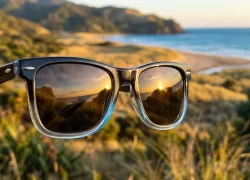
Glare off water is horizontally polarised light, it bounces flat off the surface and hits your eyes at the angle that causes the most visual disruption. Polarised lenses have a vertical filter that blocks exactly that. What gets through is the light coming directly from objects rather than reflecting off surfaces, which is why everything looks clearer and more defined rather than just darker.
Standard tinted lenses dim the world. Polarised lenses clarify it. That's the actual difference.
Fishing Specifically
Fly fishing rewards people who can read water well, spotting where fish are holding, judging the depth of a pool, watching how a current breaks around a rock. All of that is harder when you're squinting through glare. Polarised lenses give that visibility back.
Saltwater fishing is the same story. Spotting a school of kahawai working baitfish near the surface, watching a lure track through the water, seeing structure beneath the boat in clear water, it all becomes easier. Not dramatically easier in every situation, but meaningfully easier in the conditions where it counts.
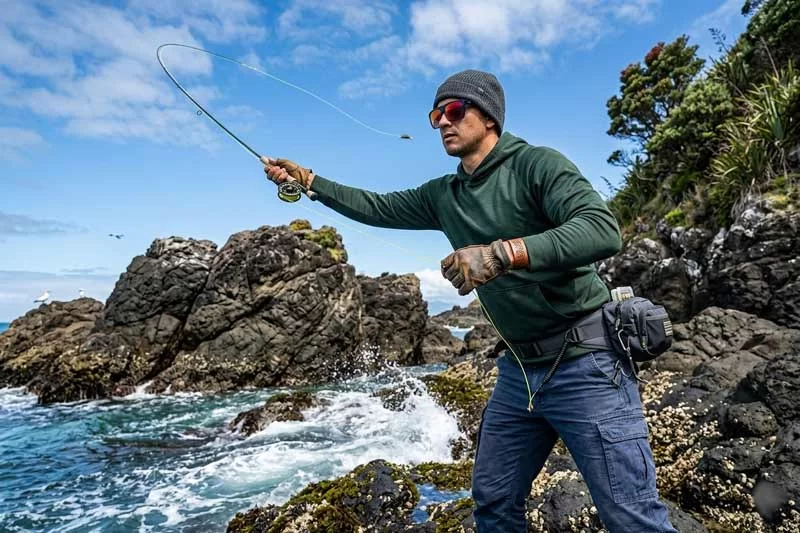
The fatigue of it gets underestimated too. Four or five hours squinting against bright reflected light is exhausting in a way that sneaks up on you. You get home with a headache and tired eyes and don't always connect it to the glare. Polarised lenses genuinely reduce that, you stay sharper for longer, which matters on a full day out.
Boating and On the Water Generally
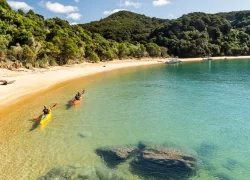
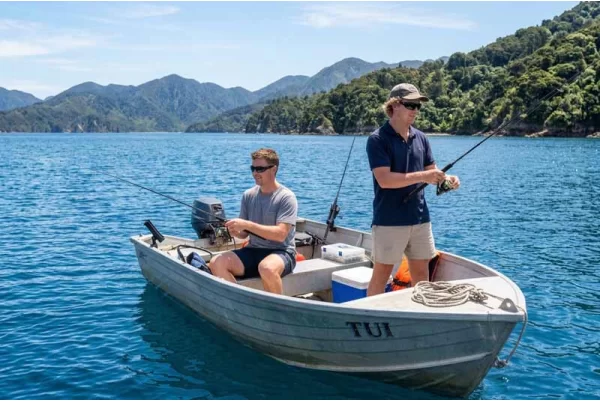
For boating it's less about catching fish and more about seeing what's in the water. In clear NZ bays, the Marlborough Sounds, Abel Tasman, anywhere around Nelson, you can see the bottom in reasonable depth if the glare's not in the way. That matters when you're navigating shallow water or watching for rocks. It's a comfort thing as much as anything else.
Kayaking, paddleboarding, even just a day at the beach, anything where you're spending hours in direct sun near a reflective surface is better with polarised lenses. Your eyes just work less hard.
NZ Sun Is Not Like Other Sun
This isn't an exaggeration. UV levels in New Zealand are measurably higher than at equivalent latitudes in the Northern Hemisphere, the ozone layer is thinner over the Southern Hemisphere and the atmosphere is cleaner, both of which mean more UV gets through. Europeans who move here are often genuinely surprised by how much more intense the sun feels.
Long-term UV exposure to the eyes is linked to cataracts and macular degeneration. A day on the water in NZ without UV400 protection is a lot of UV. All iPOP polarised sunglasses block the full UV spectrum, that's what UV400 means, so you're covered on that front regardless of which style you go for.
Which Lens Colour for Fishing
Grey lenses are the most versatile, natural colour rendering, good in bright conditions, works for most situations. Brown or amber lenses boost contrast and work better in lower light, which is often when fishing is at its best anyway, overcast days, early morning, late afternoon.
G15 green lenses are worth knowing about if you're serious about fishing. They were originally developed for aviation use and a lot of experienced fishermen swear by them, good contrast, accurate colour, and effective glare reduction. They look slightly green-tinted but not distractingly so.
Have a look at the polarised sunglasses at iPOP, prices start from $25 and there are options across all the main lens colours. If you want more background on how polarised lenses work, the polarised sunglasses guide covers the detail.
Latest Blogs