

How Sunglasses Are Made: The Parts That Actually Matter
Pick up a pair of sunglasses and they feel like one simple thing. But there is actually quite a bit going on: frames, lenses, hinges, coatings and a few hidden parts most people never think about. Understanding how it all comes together makes it easier to appreciate what you are getting when you buy a pair, especially when you are up against the New Zealand sun day after day.
The process is a mix of industrial manufacturing and careful hand assembly. Luxury brands like to make a big deal about their production methods, but for well-made, affordable eyewear like iPOP, it is really about getting the fundamentals right: solid construction, reliable UV protection, a comfortable fit and something that will last.
It All Starts with the Frame
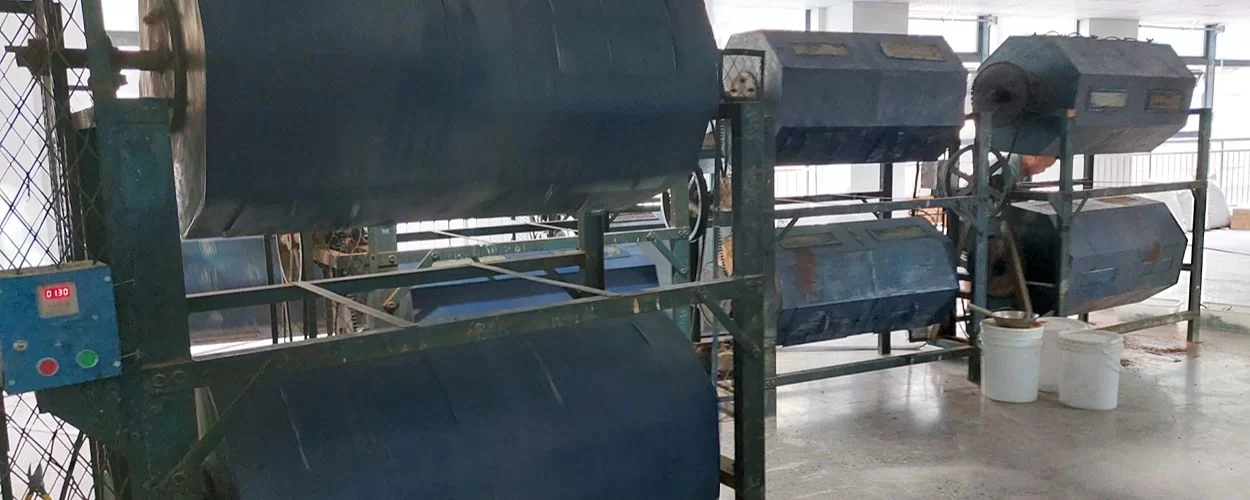
Most everyday frames are made from either plastic or a metal alloy. With plastic, there are two main approaches. The first is injection moulding, where heated plastic is pushed into a shaped mould to produce lightweight frames in a wide range of styles. The second involves cutting frames from solid sheets of acetate, a material made partly from plant-derived cellulose that can produce rich colours and classic patterns such as tortoiseshell. Once cut, acetate frames are tumbled with polishing materials until their surfaces become smooth and glossy.
Metal frames take a different route. Stainless steel and nickel-based alloys such as Monel can be formed into the rims that hold the lenses, then joined to the bridge and hinge components. After shaping and assembly, the frames are plated or coated to create finishes such as gold, silver or matte black. The balancing act is always the same: strong enough to hold their shape, but light enough to sit comfortably on your face for hours.
Why TR90 Is Worth Knowing About
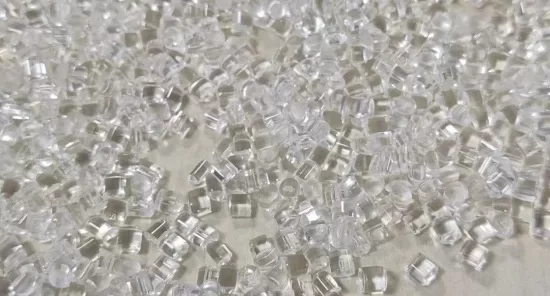
TR90 is the name commonly used for a lightweight, flexible thermoplastic found in many modern eyewear frames. One of the first things people notice about TR90 sunglasses is how little they weigh. The material also has enough flexibility to cope well with the knocks and pressure that come with everyday use.
Rather than feeling rigid and brittle, a well-designed TR90 frame can flex and return to shape. That makes it a practical choice for travel, sport and active days outdoors. It is not indestructible, but for anyone who tends to drop their sunnies or carry them in a busy bag, the combination of low weight and resilience can make a real difference.
The Hinge: Small Part, Big Impact
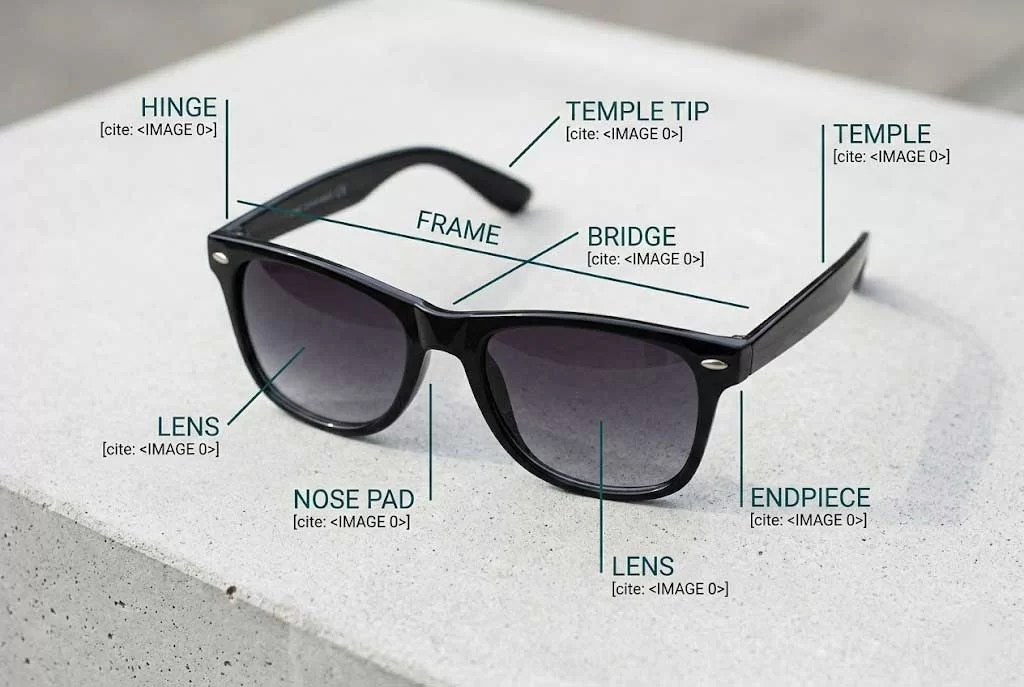
The hinge is the main moving part on a pair of sunglasses, and it is easy to overlook until it fails. Standard barrel hinges are the most common: interlocking metal loops held together by a small screw. They are reliable and, if the screw works loose over time, they are usually straightforward to tighten or replace.
Spring hinges are another popular option. A small internal spring lets the temples flex slightly beyond their normal open position, providing more give for different head sizes. This can reduce pressure at the sides of the head and place less strain on the frame when the sunglasses are put on or removed.
The Lens: Where the Real Work Happens
The lens is arguably the most important part of the whole pair. Many quality, affordable sunglasses use polycarbonate rather than glass, and for good reason. Polycarbonate is lightweight and highly impact resistant, so it is also used in many types of protective glazing and safety eyewear. Acrylic is another common lens material, although it generally offers less impact resistance than polycarbonate.
Lenses are shaped to fit each frame, then tinted and treated according to their intended use. The essential feature is the UV400 filter, which blocks ultraviolet wavelengths up to 400 nanometres, covering UVA and UVB. Every pair of iPOP sunglasses provides UV400 protection, including our full range of polarised sunglasses.
Beyond UV protection, lenses can be finished in different ways depending on their purpose. Mirror coatings, including the colourful finishes often seen on sporty styles, reflect some visible light away from the eyes and can be useful around water or snow. Gradient lenses are darker at the top and lighter toward the bottom, helping to reduce overhead brightness while keeping the lower field of vision clearer. Polarisation is a separate feature that reduces reflected glare from flat surfaces such as wet roads and water.
The Hidden Skeleton: Inner Core Wire
Most people never know it is there, but many plastic sunglasses have a thin metal wire concealed inside each temple. This is known as inner core wire. It reinforces the temples, helps them hold their shape and allows a trained optician to make small adjustments to the fit where the frame design permits.
The wire is inserted or moulded into the temple during production, so it is protected by the surrounding plastic and is usually invisible from the outside. On transparent or translucent frames, it may become part of the design and can feature etched patterns or branding. Inner core wire is particularly useful in acetate and some conventional plastic temples, while flexible materials such as TR90 may be designed to work without it.
It is a small construction detail, but it can affect how solid a frame feels and how well the temples keep their alignment after regular wear. Like a good hinge, it is one of those unseen features that matters more over time than it does on the shop shelf.
Assembly and Quality Checks
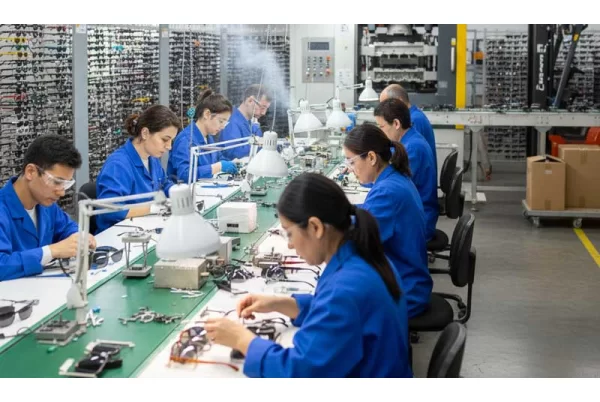
Once the frame, lenses, hinges and temples are ready, the sunglasses are assembled by hand and machine. The lenses must sit securely without placing uneven stress on the frame. Screws are tightened, temples are aligned and the finished pair is checked to make sure it opens smoothly and sits level.
Quality control also includes checking the lens tint and coatings, looking for scratches or marks, and confirming that the frame finish is clean and consistent. Each pair then goes through final cleaning before it is packed. The machines do much of the shaping and polishing, but people still handle many of the stages that determine whether the finished sunglasses feel right.
Visiting an iPOP Sunglasses Factory in China
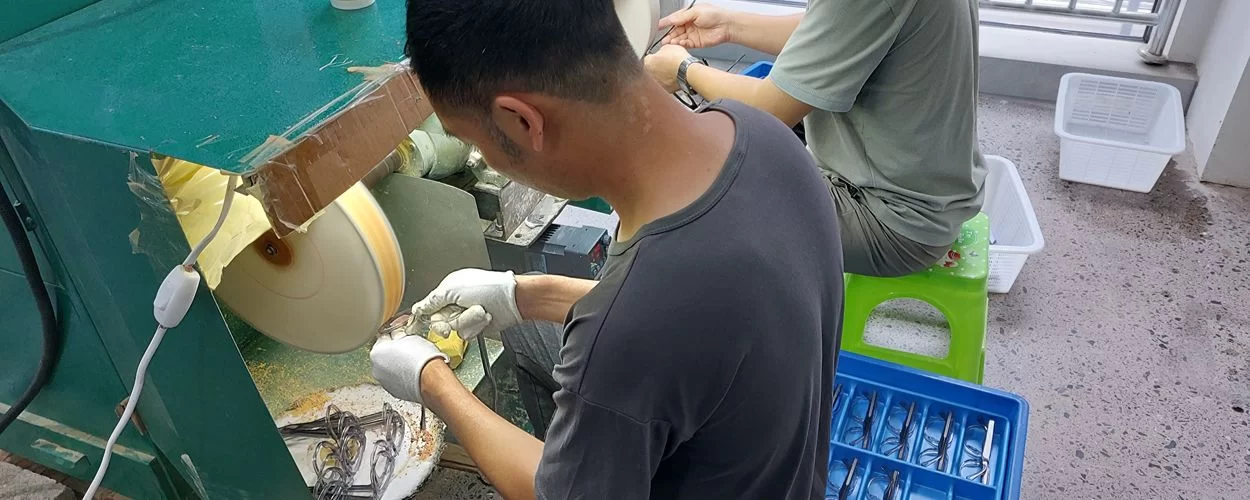
On a recent trip to China, I visited one of the small, family-run factories where iPOP sunnies are made. It was fascinating to see how many stages are involved in producing a finished pair, from raw frame materials and polishing to lens fitting, alignment and packing.
The factory is small by Chinese manufacturing standards, but it still produces thousands of pairs of sunglasses each month. Seeing the process in person reinforced something important: good eyewear is not about one impressive feature. It comes from getting dozens of small details right and checking them consistently.

What Actually Matters When You Buy Sunglasses
You do not need to know every manufacturing step to choose a good pair. Start with proper UV400 sunglasses, then look for a comfortable fit, reliable hinges and frame materials suited to how you will use them. If glare from water, roads or other reflective surfaces is a regular problem, polarised lenses are worth considering.
The label on the temple is only part of the story. Well-made sunglasses come down to sensible materials, careful assembly and consistent quality checks. That is what iPOP focuses on: practical eyewear for New Zealand conditions, without the inflated price tag.
Latest Blogs