
Why NZ Sun Has Higher UV
Kiwis love telling overseas visitors that our sun "bites harder" here, and honestly, it's not just a saying. New Zealand's UV levels really are higher than most people expect, and the science behind it is more interesting than you'd think.
The Numbers Behind It
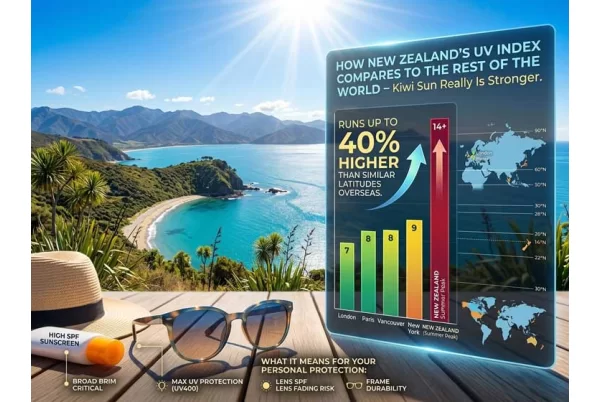
Atmospheric scientists at NIWA have measured peak UV intensity in New Zealand at roughly 40% higher than at comparable latitudes in the Northern Hemisphere, places like southern Europe or the northern United States. That's a big gap for two spots sitting at the same distance from the equator.
There are three main reasons for it. First, Earth's orbit is elliptical, not circular, and our summer happens to fall when the planet is closest to the sun, adding a small but real boost to UV exposure. Second, ozone gets produced near the equator and moves toward the poles more efficiently in the Southern Hemisphere, leaving less of it sitting above us. Third, and biggest of all, New Zealand's air is simply cleaner. Less pollution means less UV gets filtered out before it reaches the ground.
How We Compare to Australia, the US, and Europe
Australia usually gets called out as having the world's harshest sun, and up north it probably does beat us. But NZ isn't far behind. We regularly hit UV readings above 12 in summer, which puts us up there with high-altitude places like the Andes, somewhere you'd expect to need serious sun protection just to walk outside. If you're used to sun in the UK, most of Europe, or the northern US, ours is a different beast entirely. Even on a cloudy, mild day here, you can burn faster than on a clear summer day back there.
Why Kiwis Still Get Caught Out
Part of the problem is temperature. It's often cooler here than in Australia, so people don't feel the need to slap on sunscreen or grab sunglasses, even when the UV index is genuinely high. Then there's how much time we spend outdoors, fishing, hiking, playing sport, mucking around in the garden, so it's easy to rack up hours in strong UV without really noticing. Come winter, UV drops off a cliff (rarely above 3), which is probably why so many of us stop thinking about sun protection for months, then get burnt all over again once spring rolls around.
What This Means for Your Sunglasses
Given how much stronger our summer sun really is, proper UV protection matters more here than in a lot of other countries people compare us to. If you want the full picture on what to actually look for in a lens, our UV400 guide breaks down what that rating actually means.
And if polarised lenses are still a bit of a mystery to you, we've gone into that properly in Polarised Sunglasses Explained.
Polarised lenses will help reduce the glare and enhance the colours that you see.
So next time someone tells you Kiwi sun isn't that bad, you'll know better.
Latest Blogs