
Timeless Sunglasses Styles That Always Look Good
Trends come and go, but a handful of sunglasses designs just refuse to date. You'll spot them on your parents' old photos and on someone walking past you tomorrow. Here's why these particular styles have stuck around so long, and what makes each one worth considering next time you're shopping for a pair.
Ray-Ban Aviator
Ray-Ban originally built the Aviator back in the 1930s for US Air Force pilots who needed something to cut the glare at altitude. The teardrop lens and thin metal frame weren't a fashion choice at all, they were just practical. It didn't take long for people on the ground to want a pair too.
Decades later, Tom Cruise strapped a pair on for Top Gun and the style exploded all over again. Nearly a century on from that first military order, Aviators still show up on runways, at festivals, on anyone who wants a shape that suits basically any face. Hard to think of another design with that kind of run.
Ray-Ban Wayfarer: King of Chill
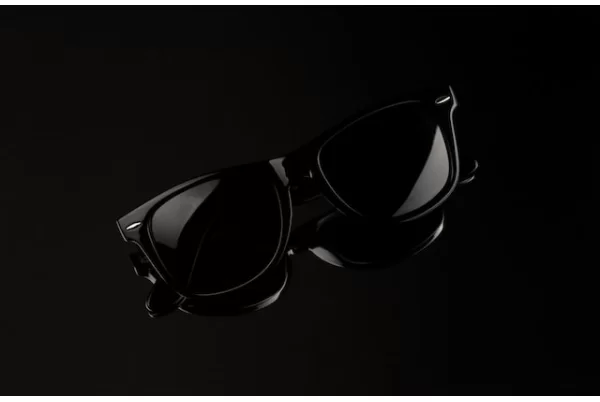
By the 1950s, sunglasses were mostly small and fussy, so the Wayfarer came along and did the opposite. Chunky frames, sharp angles, nothing subtle about them. Musicians and actors adopted the look fast, and it became shorthand for not caring what anyone thought.
The Blues Brothers and Risky Business gave the Wayfarer a second life in the 80s, and Ray-Ban has kept releasing new colourways ever since without touching the shape that made it work. Throw a pair on with a t-shirt or a blazer and it reads the same way either time: relaxed, a bit rebellious, unmistakably itself.
Oakley Frogskins: Loud and Tough
Frogskins landed in 1985 right as the skate and surf scenes wanted colour and durability over anything understated. Solid plastic frames, bright finishes, built to survive a wipeout rather than sit in a case.
They're still a fixture in those same scenes today, though you'll also see them on people who just like a bit of personality in their eyewear. Neon or matte black, they've got enough attitude to work as a statement piece and enough toughness to actually get worn hard.
Persol 649: Italian Class
Marcello Mastroianni wore the Persol 649 in the 1960s and effectively turned it into shorthand for Italian style. The frame's known for its flexible temples, a small hinge detail that let it bend without snapping, which was a genuinely clever bit of engineering for the era.
It's the kind of pair that gets noticed by people who know what they're looking at rather than shouting for attention. Understated, well made, and still a favourite among people who care about how something's put together as much as how it looks.
Ray-Ban Clubmaster: Old-School Smart
The Clubmaster borrows a bit from both the Aviator and the Wayfarer, metal along the bottom, thicker plastic across the brow, and lands somewhere between the two in feel. It first showed up in the 50s with a slightly academic, browline look that hasn't really gone out of style since.
It sits comfortably in a smart-casual outfit without trying too hard, which is probably why it's held on as a reliable choice across so many decades.
Maui Jim Ho'okipa: Polarised Power
Maui Jim built the Ho'okipa around function first. It's become one of the better-known men's polarised sunnies for exactly that reason, cutting glare off water made it a natural pick for anyone fishing or spending lots of time outside.
The frame is light enough to forget you're wearing it, and the lens clarity holds up whether you're on a boat or just walking down the street. A rare case of a genuinely technical design that also happens to look good.
Oakley Holbrook: Retro Meets Grit
The Holbrook leans on 60s and 70s frame shapes but runs them through Oakley's usual attention to lens tech and build quality. Square-ish, solid, and sturdy enough to handle a bike ride or a day outdoors without babying it.
It's popular with people doing something active in them, but it slides just as easily into an everyday outfit. That mix of toughness and easy style is pretty much the Oakley signature.
Carrera 5512: Big and Bold
Oversized frames were everywhere in the 70s, and Carrera's 5512 was one of the styles that defined the look. Huge lenses, frames that didn't apologise for taking up space, worn by people who wanted to be seen.
It still has that same effect now. If you want something with genuine vintage presence rather than a modern imitation of it, this is one of the originals.
Latest Blogs